
Life is co-ed
He Kura te Irahuhua
At St Andrew’s College, co-education is woven through the way students learn, relate, and grow. Girls and boys share classrooms, conversations, challenges, and opportunities, building the habits of confidence, respect, and collaboration that matter in life beyond school. It is part of how the College prepares young people not only to achieve well, but to participate well, in teams, in leadership, in community life, and in the wider world.
A deliberate educational choice
Co-education at St Andrew’s is intentional. It reflects the belief that students are best prepared for the future when they learn alongside others whose experiences, strengths, and perspectives are not identical to their own.
That does not dilute standards. It strengthens the learning environment by asking students to think beyond themselves, communicate with maturity, and develop the confidence to contribute in a shared space.
Strong outcomes, not trade-offs
For some families, a key question is whether co-education comes with any academic compromise. At St Andrew’s, the answer is no. Girls and boys both achieve strongly here, and the College’s recent NCEA results provide clear evidence of that.
What those results reinforce is not only that students achieve well, but that co-education at St Andrew’s supports ambition, visibility, and confidence for both girls and boys. Academic strength is part of the co-ed story here, not separate from it.

Learning alongside different perspectives
Co-education gives students daily practice in encountering views, instincts, and approaches that are not the same as their own. That makes learning more demanding in the best sense. It sharpens discussion, broadens understanding, and helps students become more thoughtful, adaptable learners.
At St Andrew’s, that happens not only in lessons, but across leadership, performance, service, and shared College life. Students learn to bring their own voice with confidence while also understanding how to work constructively with others.
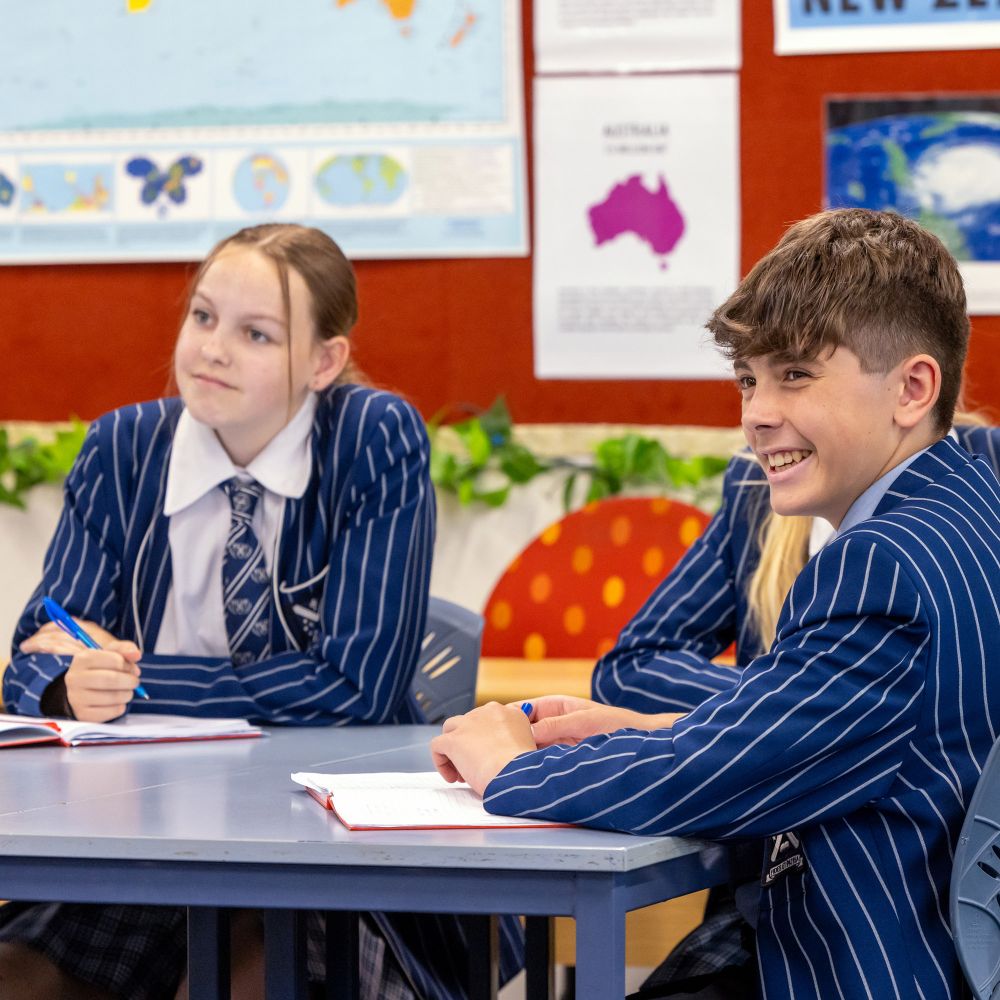
Confidence, respect, and healthy relationships
Learning together over time helps students grow in self-awareness and in their regard for others. It normalises difference, challenges assumptions, and builds the habits of healthy communication and mutual respect that matter long after school.
At St Andrew’s, those habits are reinforced by clear expectations and a school culture where students are encouraged to contribute positively, treat others well, and understand that confidence and respect belong together.

Opportunity and visibility for every student
In a co-educational environment, students see leadership, achievement, creativity, and contribution expressed by many different people, in many different ways. That matters because it broadens their sense of what they might pursue and who they might become.
At St Andrew’s, girls and boys grow up seeing one another as thinkers, leaders, performers, teammates, and contributors. That visibility helps prevent school life from becoming too narrowly defined and gives students a wider horizon for their own ambitions.

Preparation grounded in everyday experience
Life after school asks young people to work with many kinds of people, communicate clearly, and contribute with confidence in shared environments. At St Andrew’s, students develop those capabilities gradually and naturally through everyday co-educational school life.
By the time they leave, they are not learning those skills for the first time. They have already been practicing them for years, alongside their academic learning, and that gives them a strong foundation for what comes next.

At St Andrew’s, co-education helps shape young people who are confident in themselves, respectful of others, and ready to take their place in a complex and connected world.
Where people belong, grow
and flourish.

Our Vision and Spirit

Academic Excellence

Our Campus
Our People