Engagement: Helping Young People Find Their Focus
17 May 2026
Take a moment to think about your child over the past week. When did they seem most focused? It might have been something small: a conversation, a problem they couldn't put down, something they made or practised. Often, it starts with curiosity, a spark that draws them in and keeps them there.
These moments are easy to overlook, but they tell us something important. They offer clues about what captures a young person’s attention, and where their strengths lie, as well as where they may find a sense of purpose in the future.
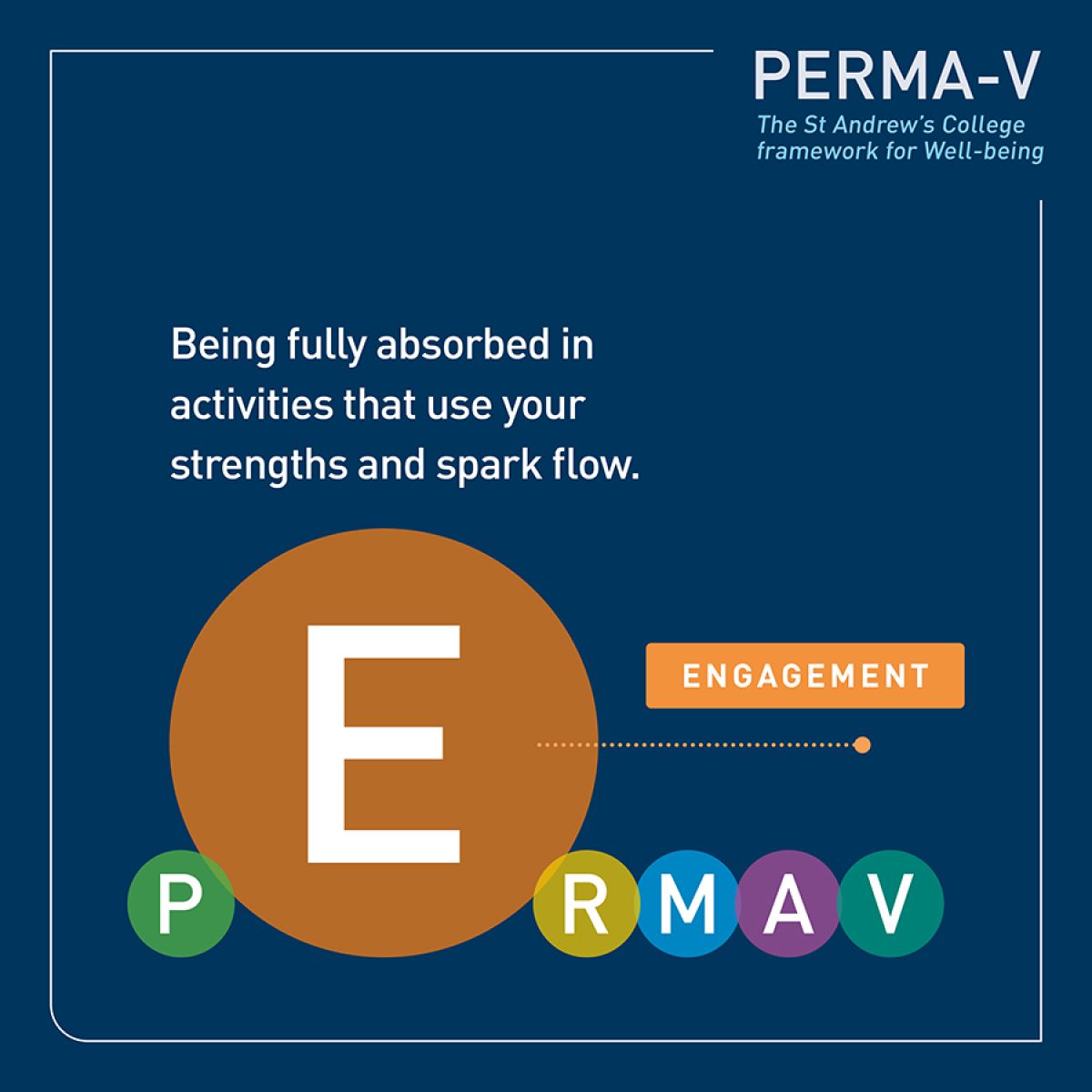
This term, we're exploring PERMA‑V, our College framework for well-being, one building block at a time. PERMA‑V includes six pillars: Positive Emotion, Engagement, Relationships, Meaning, Accomplishment, and Vitality. Each fortnight we share simple ways families can support one of these at home.
This week’s pillar is Engagement, Rumakina – being fully immersed in what you’re doing, or drawn into something that holds your attention and focus. It is when young people are interested, focused, and willing to put effort into something that matters.
At St Andrew’s College, engagement also means making the most of opportunities: trying new things, staying with challenges, and discovering what sparks energy and interest. It’s about being in the present moment.
What engagement actually does
Engagement is at the heart of powerful learning. When students are engaged, something shifts. Attention sharpens, distractions fade, and they draw on their character strengths as they become more present.
Psychologists describe this state as “flow” – when challenge and skill are well matched and a person becomes fully absorbed. In these moments, learning deepens, effort feels meaningful, and confidence grows through progress. Students often come away feeling more motivated, not less.
Engagement supports mental health too. Being absorbed in something offers a break from worry or overthinking, helping the mind reset.
Importantly, engagement doesn't always look like excitement. It can look like quiet focus, persistence, or simply staying with something a little longer than usual.
Why engagement matters in adolescence
Adolescence is a time of identity formation. Young people are often asking: What am I good at? What do I enjoy? Where do I fit?
Engagement helps answer these questions. Through different experiences, students begin to notice what captures their attention, what gives them energy, and what feels worth the effort. Often, this begins with simply saying yes to an opportunity, even if it feels unfamiliar.
One of the real joys of working with young people is seeing the many ways engagement comes to life – on the sports field, in performance, in classroom discussion, through creativity, or in quieter pursuits. What matters is not the activity, but what happens to the student. When they find something that draws them in, you often see a shift in their whole sense of self. Confidence grows, not from being told they are capable, but from experiencing it.

Six ways to support engagement at home
1. Follow their attention
"What held your attention today?"
Children often can’t articulate what engages them until someone asks. These conversations help them build the self-awareness that carries into school and beyond.
2. Encourage curiosity
Engagement often begins with a question or a spark of interest. Make space for curiosity and conversation. When curiosity is valued, children are more likely to explore and stay involved.
3. Spot their strengths
"You really stuck with that."
"That showed real humility/curiosity/creativity."
Parents often notice things children miss about themselves. Naming a strength in the moment is more powerful than general praise – it helps them understand what they bring.
4. Make it safe to try and not succeed
"You don’t have to be good at it to give it a go."
When there’s no fear of getting it wrong, children are more willing to engage, take risks, and keep going when things feel challenging.
5. Protect time for interests
Sport, music, reading, making things, being outside. These aren’t extras.
Even 20–30 minutes of uninterrupted time allows young people to become genuinely absorbed.
6. Support focus (including technology boundaries)
Help your child notice what supports their concentration:
"What helps you focus best?"
For many young people, this includes thinking about technology. Small shifts, like putting devices aside, or starting with a short block of focused time, can make a surprising difference to their ability to become absorbed in something.

Engagement isn't about being busy or enjoying everything. It's about helping young people find moments where they are involved, interested, and willing to invest effort. Over time, these moments help them discover who they are, what matters to them, and what they are capable of.
Related Posts