The Preparatory School Curriculum
Marau Kura Tuatahi
The Preparatory School curriculum at St Andrew’s College is designed to help Year 1–8 students build strong foundations, grow as confident learners, and develop the skills, values, and curiosity they need for the next stage of their education. Guided by the New Zealand Curriculum and shaped by the special character of St Andrew’s, learning is broad, connected, and designed to help children understand both what they are learning and how to learn well.
A curriculum that builds strong foundations
Our Preparatory School curriculum is grounded in high expectations, inclusion, cultural understanding, community connection, and a strong focus on learning to learn. Students are encouraged to become confident, creative, connected, and actively involved learners who can apply their knowledge in meaningful ways.
Learning is designed to be coherent across subjects, responsive to student needs, and connected to real-life contexts. Students are supported to develop strong foundations in literacy, numeracy, communication, critical thinking, creativity, and problem-solving, while also growing the confidence to participate fully in school life
Learning to learn
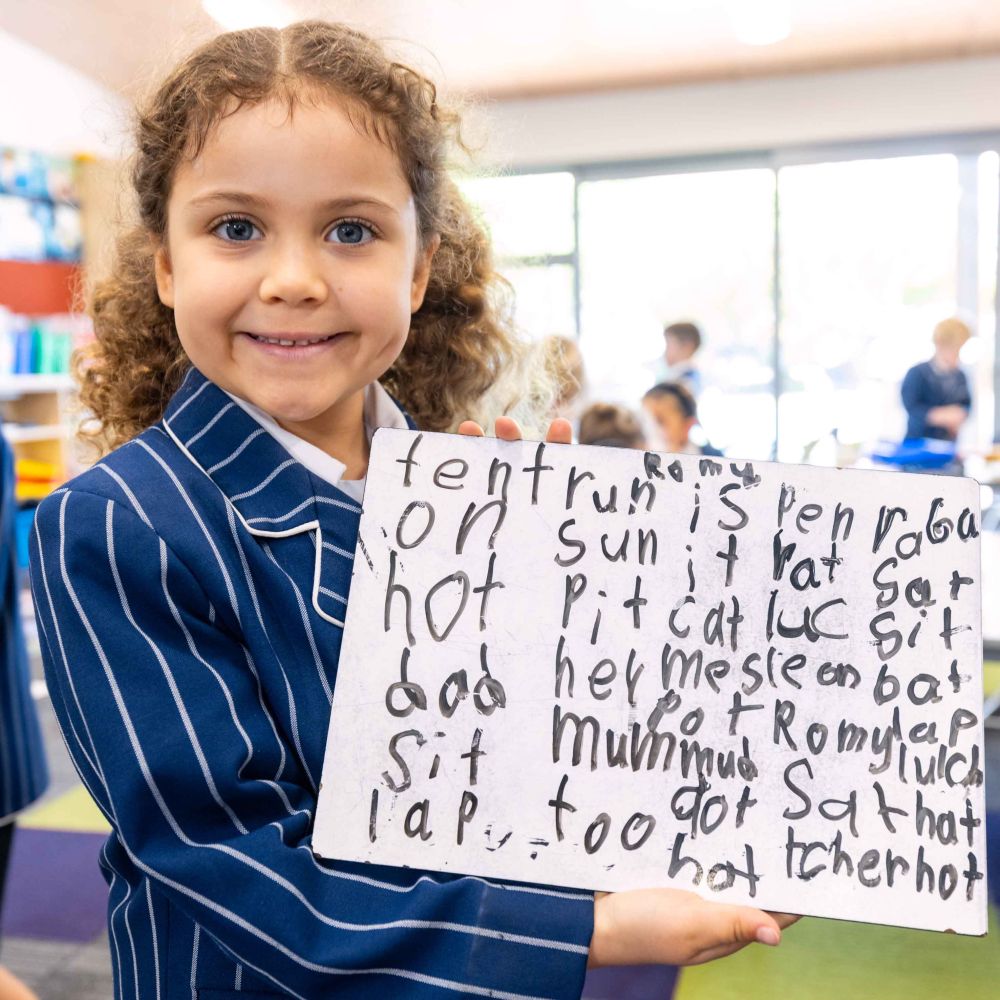
A key focus of the Preparatory School is helping students develop the habits and skills that support sustained learning. Key Competencies are woven through all areas of the curriculum and help students manage themselves, think carefully, communicate effectively, relate well to others, and participate and contribute with confidence.
These competencies are developed through classroom learning, specialist teaching, co-curricular experiences, and daily interactions across the school. They are reflected on regularly by students and staff and reported to families throughout the year.
Values in action, StAC-UP
StAC-UP supports the way values are taught and lived in the Preparatory School. It provides clear expectations for students and helps guide interactions between students, staff, parents, and the wider community.
These shared expectations help create a school environment where children feel safe, cared for, and ready to learn. They also guide the way we respond to challenge, conflict, and everyday opportunities for growth.
Be Safe – inside, outside and online.
Be Ready – to learn in all situations.
Be Respectful – towards others and yourself.
Key curriculum areas
The Preparatory School curriculum gives students broad exposure to different areas of learning, while building depth in the core foundations they need for future success.
-
Mathematics including Numeracy
Students develop confidence, competence, problem-solving skills, perseverance, and the ability to communicate mathematical thinking. Mathematics is taught as a practical tool for understanding patterns, relationships, data, and real-world problems. -
English
Students are supported to become effective oral, written, and visual communicators. They learn to listen, read, view, speak, write, and present with increasing confidence, while developing critical thinking and the ability to create meaning for themselves and others. -
Inquiry Pathway (includes Social Science, Science, Technology and Health)
Inquiry learning includes Social Science, Science, Technology, and Health. Students learn through exploration, questioning, discovery, and reflection, developing skills in literacy, communication, creative and critical thinking, and making sense of the world around them. -
Languages
Students receive Spanish teaching from Year 1–7. In Year 8, students are introduced to French and Japanese through specialist teaching. All students also receive basic Te Reo Māori tuition from their classroom teacher. -
The Arts
Students attend specialist lessons in Visual Art, Dance and Drama, and Music. Where possible, these lessons connect with classroom inquiry units. In alternate years, all Year 7–8 students take part in a school production. -
Health and Physical Education
Physical Education supports long-term physical well-being, self-esteem, social development, and mental awareness. Students attend one session each week with a specialist PE teacher, followed by a classroom-based lesson with their teacher. -
Technology
Year 7–8 students attend weekly Materials Technology lessons and complete two semesters of Food Technology during their time in these year levels. -
Science
Science is integrated into inquiry learning throughout the year, with some stand-alone units taught to provide greater depth. The Preparatory School science laboratory is used for regular practical science from Year 6–8.
Assessment that supports progress
Assessment in the Preparatory School is used to understand each student’s progress and identify their next steps. Teachers gather information through observations, learning conversations, work samples, standardised tools, conferencing, and classroom assessment.
This information helps teachers tailor learning, provide useful feedback, identify support or extension needs, evaluate teaching strategies, and plan for individual and group progress. Assessment is not separate from learning, it helps shape it.

Reporting and learning conversations
Families receive regular information about their child’s progress. Goal Setting Reports are sent home in Terms 1 and 4, outlining progress towards curriculum expectations, initial testing and data in Mathematics and Literacy, individual next learning steps, and Key Competency goals.
Key Competency Reports are sent home at the end of Terms 2 and 4, summarising progress in Mathematics and Literacy, specialist staff assessments, teacher comments, and academic and co-curricular achievements. Learning Conferences provide opportunities for families to discuss progress, goals, and next steps with teachers.
Student e-portfolios play a crucial role in recording and reporting learning achievements. For students in Years 1–7, we use the See-Saw program to store portfolios, allowing easy sharing of current work examples with parents and family. As students progress through the school, they gain ownership over the chosen samples. By Year 8, students share their learning via OneNote.